Small cracks in teeth are easy to ignore because they rarely announce themselves. You might feel a quick twinge on cold water or a strange zing when you bite down, then nothing for weeks. That quiet is exactly what makes them risky.
A crack does not heal the way a scraped knee does. Once the enamel splits, chewing pressure keeps working on it, deepening the line a little more each day.
By the time a cracked tooth actually hurts, the problem has often moved past the surface. Catching it early is the difference between a simple fix and a much bigger one.
What Are Small Cracks in Teeth?
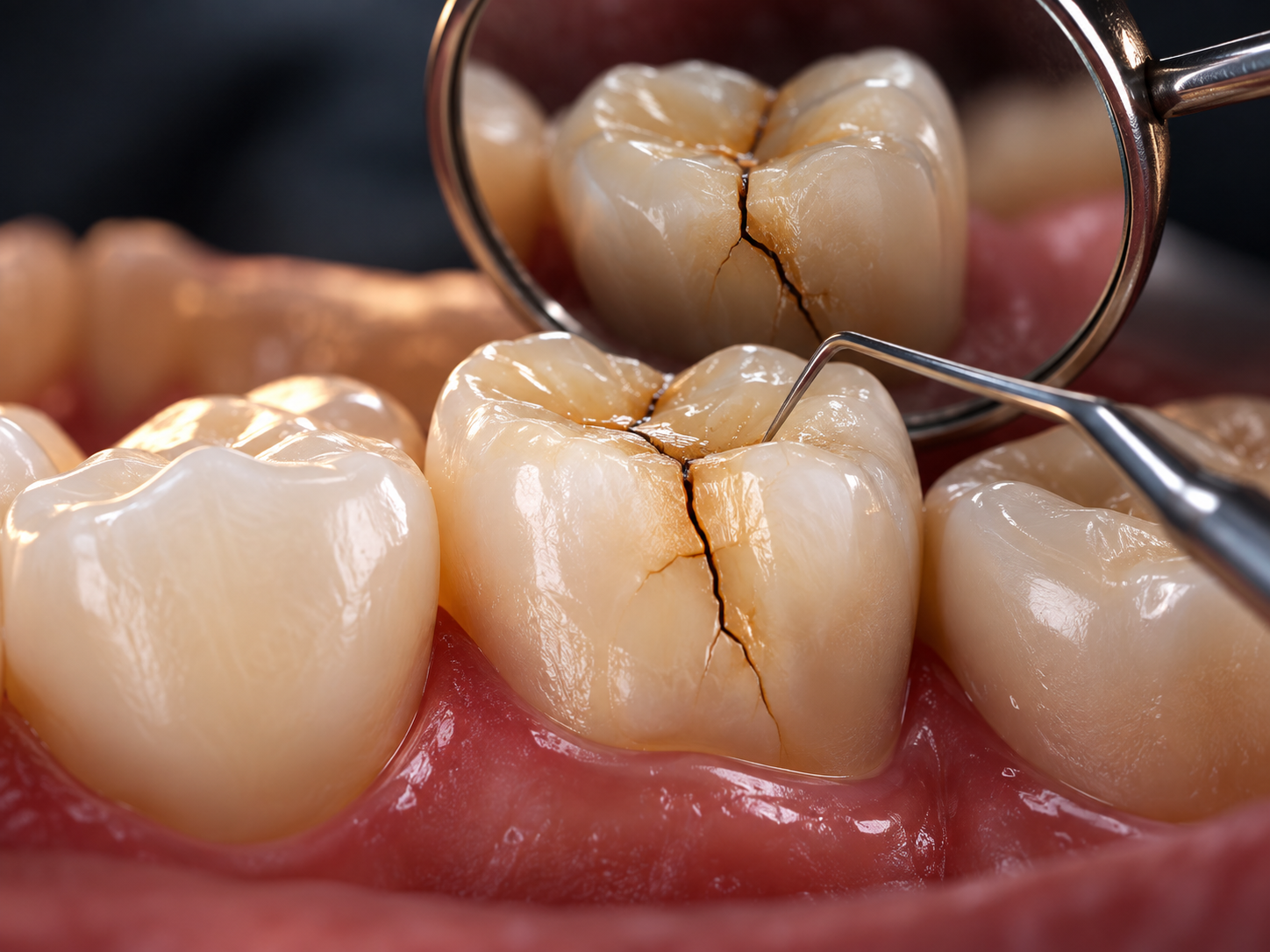
Small cracks in teeth are tiny fractures in the enamel or deeper tooth structure that often start too small to see or feel. Some stay on the surface for years. Others slowly work their way toward the nerve.
Dentists group these fractures into a few types. Craze lines sit only in the outer enamel and are usually harmless. A cracked cusp, a fractured filling edge, or a vertical crack running toward the root is far more serious.
Think of it like a chip in a car windshield. A tiny star might sit still for months, then spread across the whole glass after one cold morning and one bump in the road. Teeth handle a similar mix of temperature swings and daily force.
Why Do Small Cracks in Teeth Progress Silently?
Small cracks in teeth progress silently because the outer enamel has no nerves, so the early damage causes no pain at all. You only start to feel something once the crack reaches the sensitive layers underneath.
Enamel is the hardest tissue in your body, but it is also brittle. It can split without sending any signal, since there are no pain receptors in that outer shell.
Below the enamel sits dentin, and below that lives the pulp where the nerve is. A crack has to travel a fair distance before it reaches anything that hurts. That travel time is the silent phase.
How Does Everyday Chewing Make It Worse?
Everyday chewing acts like a wedge that drives a crack deeper with every bite. Each time you clench or grind, pressure concentrates along the fracture line and pries it open a little more.
Hard foods, ice, and nighttime grinding speed this up. So does an old, large filling that leaves less natural tooth to absorb the force.
The tooth flexes thousands of times a day. A crack that felt like nothing in spring can reach the nerve by fall.
How Do Small Cracks Turn Into Bigger Problems Before You Feel Pain?
Small cracks turn into bigger problems because they open a hidden path for bacteria to reach the inside of the tooth. Decay and infection can take hold long before the tooth ever aches.
Here is the progression most cracked teeth follow when they go untreated:
- A hairline crack forms in the enamel and causes no symptoms.
- Chewing pressure widens the crack into the dentin, sometimes bringing brief sensitivity to cold or sweets.
- Bacteria slip into the opening and start decay where a brush cannot reach.
- The crack nears the pulp, and you may notice sharp pain when biting or releasing.
- The nerve becomes inflamed or infected, which can lead to a root canal or extraction.
Each step limits your options and raises the cost. A crack caught at stage one might need only a small bonded repair. The same crack caught at stage five can mean saving the tooth is no longer possible.
Why Is Sensitivity When Biting an Early Warning?
Sensitivity when biting down, especially a sharp pain as you release, is one of the earliest reliable signs of a crack. That release pain happens when the two sides of the fracture shift against each other.
It often comes and goes, which is why people wait. A crack that hurts on Monday and feels fine by Wednesday is still a crack. The quiet stretch does not mean it healed.
What Does Dr. Krauss Look For When Checking Small Cracks?
Dr. Krauss looks for cracks using a combination of visual exam, magnification, dental imaging, and simple bite tests, since no single tool catches every fracture. Cracks are notoriously hard to spot, so he layers several methods.
At Bakersfield Smile Design, that means using advanced imaging to see below the surface and around existing fillings. Some cracks hide in shadows on a standard view, so detailed imaging helps flag trouble early.
He also checks how a tooth responds to pressure and temperature. A bite stick can pinpoint which cusp is cracked, while a cold test shows how close the fracture sits to the nerve.
Your history matters too. If you grind your teeth, chew ice, or have several older fillings, he watches those teeth more closely because they carry the highest risk.
What Are the Treatment Options for a Cracked Tooth?
Treatment for a cracked tooth depends on how deep the crack runs and whether it has reached the nerve. The earlier it is caught, the simpler and less expensive the fix tends to be.
Common options run from conservative to more involved:
- Bonding or a small filling can seal a shallow crack that has not reached the dentin deeply.
- An onlay or crown covers and protects a tooth with a larger crack, holding the pieces together under chewing force.
- A root canal becomes necessary when the crack reaches an inflamed or infected pulp, removing the damage and saving the tooth.
- Extraction is the last resort, used only when a crack splits the tooth or runs below the gumline where it cannot be repaired.
Because Bakersfield Smile Design offers a wide range of services under one roof, Dr. Krauss can match the treatment to the tooth without sending you elsewhere. He walks through the honest tradeoffs first, so you understand why a crown protects better than a filling for a deep crack.
Can a Cracked Tooth Ever Heal on Its Own?
A cracked tooth cannot heal on its own, because tooth structure does not regenerate the way skin or bone does. Once enamel and dentin split, the gap stays open unless a dentist repairs it.
Waiting only gives the crack more time to spread. The goal of early treatment is to stabilize the tooth before it reaches the point of no return.
How Do You Decide if It Is Time to Get a Crack Checked?
Start with one honest question: has a tooth given you any odd sensitivity, twinge, or discomfort in the last few weeks, even briefly? If yes, that tooth is worth a look.
Use these points to guide your next step:
- Book an exam if you feel a sharp pain when biting down or when you release the bite, since that is a classic crack sign.
- Move it up your list if a tooth reacts to cold or sweets in a way it never did before.
- Pay attention if you grind your teeth or clench at night, because that habit drives cracks deeper over time.
- Watch teeth with large or old fillings, as they have less natural structure and crack more easily.
- Do not wait for constant pain, since a crack that hurts only sometimes is still growing beneath the surface.
- Act sooner rather than later, because early cracks are far cheaper and simpler to treat than deep ones.
A short exam settles the question. That single visit can catch a crack while a small repair still solves it.
Common Questions About Cracked Teeth
How can I tell if my tooth is cracked?
The most common clues are sharp pain when biting or releasing, sensitivity to hot and cold, and discomfort that comes and goes. Many cracks are invisible to the eye, so a dental exam with imaging is the reliable way to confirm one.
Are small cracks in teeth an emergency?
Small cracks in teeth are usually not an emergency, but they should not be ignored either. Prompt evaluation prevents a minor fracture from reaching the nerve, which is when pain and cost climb quickly.
Will a crown always be needed for a cracked tooth?
A crown is not always needed, since shallow cracks can sometimes be fixed with bonding or a small filling. Deeper cracks often need a crown or onlay to hold the tooth together under chewing pressure. The right choice depends on how far the crack has spread.
Can whitening or hot drinks cause cracks?
Rapid temperature swings, like biting ice after a hot drink, can stress enamel and worsen an existing crack. Whitening itself does not crack healthy teeth, though it can increase temporary sensitivity in a tooth that is already fractured.
The Bottom Line on Catching Cracks Early
Small cracks in teeth deserve attention precisely because they stay quiet for so long. The enamel feels no pain, so a fracture can widen, invite bacteria, and approach the nerve while you assume everything is fine.
The encouraging part is how manageable these are when caught early. A crack found before it reaches the pulp often needs only a simple repair, while the same crack ignored can cost you the tooth.
If a tooth has given you a twinge, a zing on cold, or a sharp bite that comes and goes, take the next step. Contact Bakersfield Smile Design to schedule an exam with Dr. Krauss and protect your tooth while the fix is still simple.