
Starting dental implants before the new year gives you something most January resolutions never do: a plan that’s already moving when the calendar flips. Instead of writing “replace my missing tooth” on a list and hoping you get to it, you walk into 2027 with the hardest decision already made.
Timing matters because implants aren’t a one-visit fix. After an implant is placed, the jawbone typically needs three to six months to fuse with it before the final crown goes on. Every week you wait to begin adds a week to the finish line.
Dr. Krauss sees the same pattern every winter at Bakersfield Smile Design. A patient comes in during February, ready to replace a tooth they lost last spring. Then they learn their benefits reset weeks ago and the healing clock hasn’t even started.
With about six weeks left in 2026, you can still avoid that. Starting dental implants before the new year is a practical way to use coverage you already paid for and begin a process that takes months.
Why Should You Start Dental Implants Before the New Year?
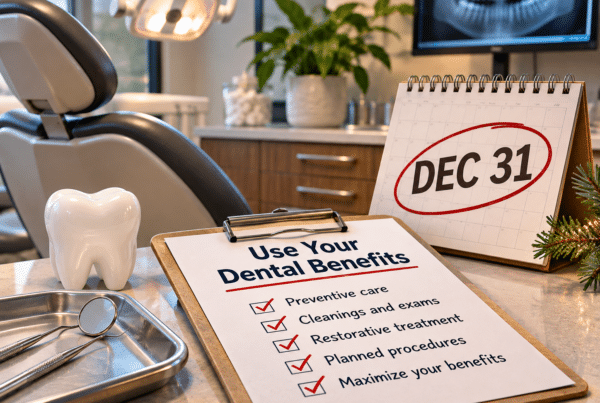
Starting dental implants before the new year lets you use dental benefits you’ve already paid for and get a months-long process underway sooner. This year’s remaining coverage becomes real progress instead of expiring on December 31.
Most dental plans run on a calendar year. If you’ve met your deductible, that money is already spent. Care you schedule now may cost less out of pocket than the same care in January.
There’s also a practical reason Dr. Krauss points out to patients. The early steps of implant treatment (the exam, imaging and any extraction) are often the easiest to fit into a short window. Getting them done now means your healing happens over the winter, not after it.
Isn’t It Better to Wait Until After the Holidays?
Waiting until after the holidays usually costs you more than a few weeks. Your deductible resets, your remaining maximum disappears and January schedules fill with patients who had the same idea.
Dr. Krauss has also seen what a long gap does to the jaw. Bone where a tooth used to be slowly shrinks once nothing stimulates it. The longer a space sits empty, the more likely you’ll need extra work to rebuild it.
How Long Does the Dental Implant Process Take?
The full dental implant process usually takes several months from first consultation to final crown, and the healing phase alone often runs three to six months. That’s why starting dental implants before the new year can bring your finished smile weeks or months earlier in 2027.
Here’s how a typical case unfolds:
- Dr. Krauss starts with a consultation and imaging to check your bone, gums and bite.
- A failing tooth is extracted if needed, followed by a short healing period.
- Bone grafting rebuilds the jaw when it needs more support.
- A small titanium post is placed into the jawbone.
- The bone fuses to the post over three to six months.
- A final crown is custom shaped to match your neighboring teeth.
You can see more about each step on our dental implants page.
Do You Need Bone Grafting First?
Some patients need bone grafting before an implant can be placed, especially when a tooth has been missing for a while. A graft rebuilds the bone so the implant has a solid foundation.
This is one more reason to begin early. If bone grafting is part of your plan, it adds healing time up front. Beginning dental implants before the new year keeps that extra step from pushing your final result deep into next year.
How Do Dental Benefits Help With Dental Implants Before the New Year?
Your remaining dental benefits can help offset early implant steps, like the exam, X-rays, extraction or grafting, before your coverage resets. Implant coverage varies widely between plans, so confirm what yours includes before you schedule.
Most plans cap coverage at an annual maximum. Whatever you don’t use by December 31 is usually gone.
That’s why Dr. Krauss often plans dental implants before the new year across two benefit years. One phase uses this year’s maximum. The next phase starts in January with a fresh one. For a treatment that spans months anyway, that split happens naturally.
What If Insurance Doesn’t Cover Your Implant?
If your plan doesn’t cover implants or leaves a gap, flexible financing can make the cost manageable. Bakersfield Smile Design accepts cash, credit and Cherry, a patient financing option that breaks treatment into monthly payments.
Our team walks you through the full cost before anything begins. You’ll know the numbers up front.
Who Is a Good Candidate for Dental Implants Before the New Year?
Most adults missing one tooth, several teeth or a full arch can be candidates for implants, as long as their gums are healthy and their jaw can support the post. The best candidates for dental implants before the new year already have a missing or failing tooth, so there’s little reason to keep waiting.
You’re likely a strong fit if:
- You lost a tooth this year and haven’t replaced it yet.
- You’ve been told a cracked or decayed tooth can’t be saved.
- You wear a partial or bridge that no longer fits well.
- You have dentures that slip and want something more stable.
- You’ve already met your deductible and have coverage left.
Some situations need extra steps first. Active gum disease should be treated before implant placement. Smoking and uncontrolled diabetes can slow healing, so Dr. Krauss talks through those honestly instead of rushing ahead.
Not sure an implant is the right fix? Browse our full list of procedures to compare options like bridges and dentures.
Why Does Your Implant Dentist’s Experience Matter?
An implant dentist’s experience shapes where the post is placed, how the crown looks and how well the result holds up for years. Dr. Krauss was one of the first cosmetic dentists in Bakersfield to be certified in dental implants, and implant care remains a core part of his practice.
That cosmetic background shows in the details. An implant can be solid and still look wrong if the crown’s shape or shade doesn’t blend with your other teeth. Dr. Krauss plans the final tooth from the start, not as an afterthought.
When patients begin dental implants before the new year, he maps the whole timeline at the first visit. You’ll know which steps land in December and which carry into 2027.
His experience also guides the hard calls. Some patients come in expecting an implant and leave with a plan to save the tooth instead. Either way, you get a straight answer.
How Do You Decide if Dental Implants Before the New Year Make Sense for You?
Start with one question: is there a missing or failing tooth you’ve been meaning to deal with? If yes, the next six weeks are a smart window to begin.
Use these points to guide your next step:
- Check your remaining benefits and deductible status through your insurer’s portal or the number on your card.
- Book an exam now if you’ve been told a tooth may need to come out, since extraction is often the first phase.
- Ask whether you’ll need bone grafting, because that step adds healing time and benefits from an early start.
- Consider splitting treatment across December and January to put two years of coverage to work.
- Look into Cherry financing if your plan doesn’t cover implants or leaves a gap.
- Schedule soon, since late-December appointments fill quickly.
A smile consultation with Dr. Krauss puts all of this in one plan. You’ll know your timeline, your costs and your options before the year ends.
Common Questions
Can I finish dental implants before the new year?
Most patients starting now can’t finish dental implants before the new year, because healing takes months. What you can do is complete the first phases, like the exam, imaging and extraction, while your current benefits still apply.
How soon should I book dental implants before the new year?
Book dental implants before the new year as early as possible, ideally in November. Early December still works, but openings shrink as patients rush to use their benefits.
Does getting an implant hurt?
Implant placement is done with local anesthesia, so most patients feel pressure rather than pain. Mild soreness for a few days afterward is common and usually manageable.
Will my insurance cover dental implants?
Implant coverage varies widely. Some plans cover part of the implant or crown, while others only cover related steps like extractions. Our team can help you understand what your plan includes.
What happens if I wait until spring?
Waiting until spring pushes your finished tooth later into the year and starts your deductible over. A longer gap can also let bone shrink, which may add grafting to your plan.
The Bottom Line on a January Fresh Start
Starting dental implants before the new year turns unused benefits and a met deductible into real progress on a treatment that takes months to complete. Instead of starting from zero in January, you begin the year already healing.
That’s a different kind of fresh start, and it’s still within reach. Contact Bakersfield Smile Design to schedule your consultation with Dr. Krauss and get your implant plan moving before December 31.