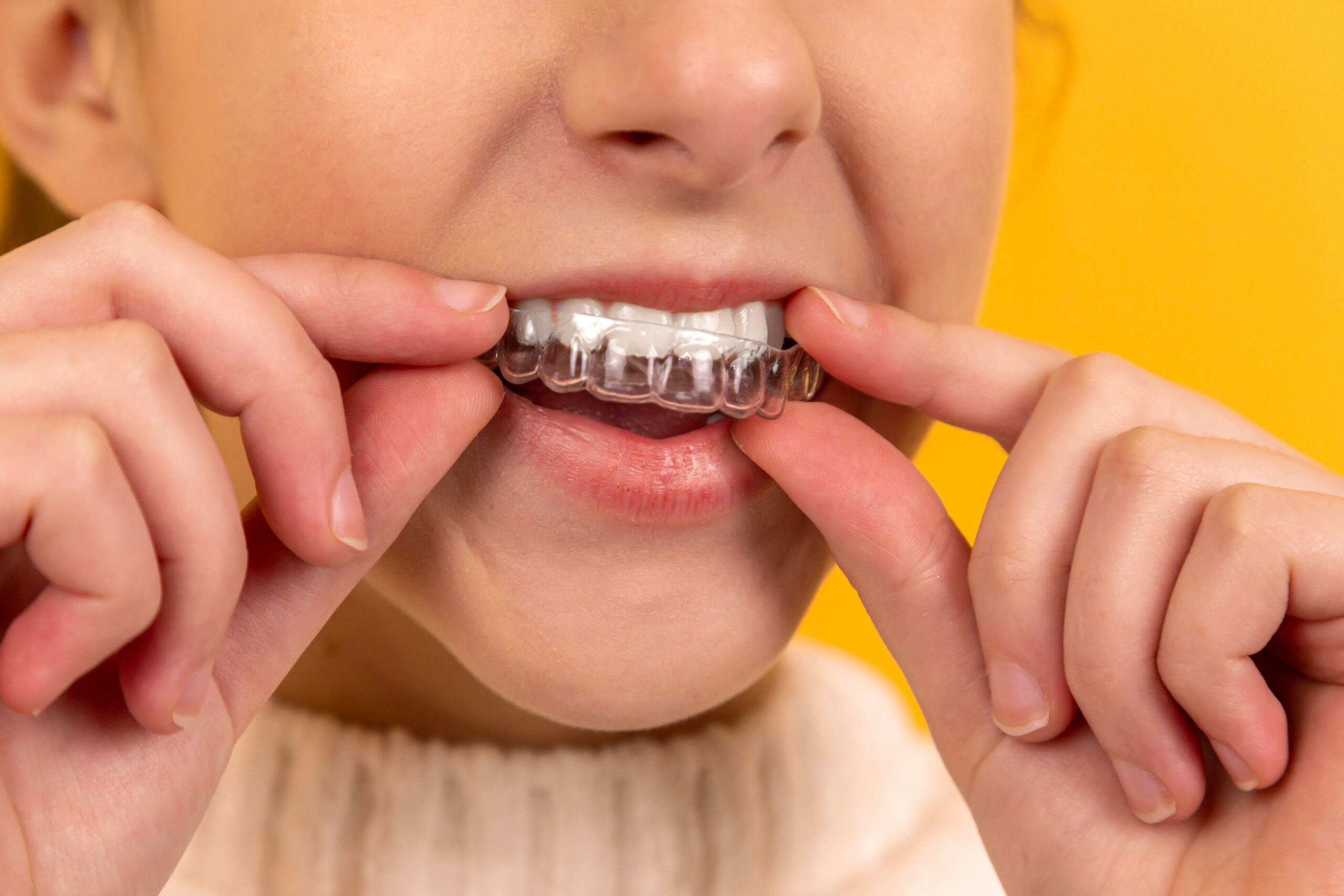
Learning how to care for Invisalign aligners between appointments is the single biggest factor in whether your treatment stays on track. The plastic trays do the moving, but your daily habits decide how fast and how cleanly that movement happens.
Most people focus on the appointments and forget the weeks in between. That is where progress is quietly won or lost.
Small slips add up. Skipping wear time, eating with your trays in or letting them go uncleaned can stretch a 12-month plan into something longer. The good news is that the right routine is simple once you know it.
How Do You Clean Invisalign Aligners Daily?
Clean your Invisalign aligners twice a day by rinsing them and gently brushing them with a soft toothbrush and clear, unscented soap. Skip regular toothpaste, since it is abrasive and can scratch the plastic, and those scratches trap bacteria and dull the trays.
Rinse your aligners every time you take them out. Saliva and plaque build up fast, and a quick rinse stops that film from hardening.
Brush your teeth before putting the trays back in. Sealing food particles against your enamel for hours is a fast track to decay and bad breath.
What Damages Invisalign Aligners?
Heat, abrasive toothpaste, colored mouthwash and hard scrubbing are the most common ways people damage their Invisalign aligners. Hot water is the biggest threat because it warps the plastic and ruins the custom fit.
Never rinse trays in hot water or leave them in a hot car. Colored mouthwash and whitening toothpaste can stain or scratch them. A soft brush and cool water protect the fit your dentist worked to create.
Should You Soak Your Aligners?
Soak your aligners a few times a week in a denture cleaner or the crystals made for clear trays to keep them clear and odor-free. A soak reaches spots brushing misses and lifts buildup you cannot see.
Rinse thoroughly before wearing them again. Do not soak in mouthwash or anything colored, since that can tint the plastic.
How Long Should You Wear Invisalign Each Day?
Wear your Invisalign aligners 20 to 22 hours every day for treatment to stay on schedule. That leaves roughly 2 hours for eating, drinking anything other than water and cleaning your teeth.
The trays only move your teeth while they are in your mouth. Every hour they sit on the counter is an hour of progress you are not making.
This is the rule people underestimate most. Wearing them “most of the day” is not the same as 20 to 22 hours, and the gap shows up as slower movement and trays that no longer fit.
What Can You Eat and Drink With Aligners In?
Only plain water should touch your teeth while your aligners are in. Everything else comes out first, no exceptions.
Take your trays out for all food and any drink that is not water. Coffee, tea, soda, juice and wine stain the plastic and feed bacteria trapped underneath.
Even hot drinks are a problem beyond staining. The heat can warp the trays, so remove them for that morning coffee rather than sipping through them.
Why Can’t You Eat With Invisalign In?
Eating with your aligners in can crack the plastic, trap food against your teeth and cause decay. The trays are not built to handle chewing force, so hard or crunchy food can bend or split them.
Trapped sugar and starch sit against your enamel with nowhere to go. That raises your risk of cavities and gives the trays a cloudy, smelly buildup.
Which Habits Slow Down Your Invisalign Progress?
The habits that slow Invisalign progress most are skipping wear time, eating with trays in and not cleaning them consistently. Each one seems minor in the moment, but together they can add weeks or months to your treatment.
Here are the biggest culprits to watch for:
- Wearing your aligners less than 20 hours a day, which is the number one reason teeth move slower than planned.
- Eating or drinking colored beverages with the trays in, which cracks the plastic and stains it.
- Skipping daily cleaning, letting bacteria and buildup dull the trays and irritate your gums.
- Rinsing trays in hot water, which warps them and destroys the custom fit.
- Switching to a new set too early or too late instead of following your dentist’s schedule.
- Leaving aligners out in the open, where they get lost, damaged or contaminated.
Fixing even one of these tends to get treatment back on pace. The wear-time habit is the one worth guarding hardest.
How Does Skipping Wear Time Stall Treatment?
Skipping wear time stalls treatment because teeth start drifting back toward their old positions within hours of removing the trays. Each set is designed to move teeth a precise amount, and that only happens with steady, all-day pressure.
Leave the trays out too long and your current set stops fitting. When the next set will not seat correctly either, your dentist may have to reorder trays and reset the timeline.
How Should You Store Invisalign Aligners?
Always store your Invisalign aligners in their case whenever they are not in your mouth. This one habit prevents most lost, damaged and contaminated trays.
Never wrap them in a napkin. That is how the vast majority of aligners end up thrown away by accident at a restaurant.
Keep the case somewhere cool and out of direct sunlight. Rinse the case regularly too, since a dirty case puts bacteria right back onto clean trays.
What Should You Do Between Checkups?
Between checkups, follow your wear schedule, keep both your teeth and trays clean and watch for anything that feels off. Consistency between visits is what makes each appointment go smoothly.
Change to your new set of aligners on the exact day your plan calls for, usually every one to two weeks. Switching on time keeps the gradual pressure working as designed.
Keep your regular cleanings and exams on the calendar too. At Bakersfield Smile Design, Dr. Krauss uses these check-ins to confirm your teeth are tracking with the plan and to catch small issues before they slow you down.
If a tray cracks or stops fitting, call your dentist rather than forcing it or skipping ahead. A quick answer keeps a small problem from costing you weeks.
How Do You Know if Your Invisalign Routine Is on Track?
Start with one question: are you honestly wearing your trays 20 to 22 hours a day? That single answer tells you more about your progress than anything else.
Use these points to check where you stand:
- Confirm you wear your aligners at least 20 hours daily, taking them out only for meals and cleaning.
- Check that you clean the trays twice a day and soak them a few times a week.
- Make sure only water touches your teeth while the trays are in.
- Verify you are switching to each new set on schedule, not early or late.
- Notice whether your current trays still seat fully, since a poor fit signals a problem worth reporting.
- Keep your trays in their case every time they come out, never loose or in a napkin.
If you checked every box, your routine is solid. If a few slipped, tightening them now protects your timeline and your investment.
Common Questions About Caring for Invisalign
How often should I clean my Invisalign aligners?
Clean your aligners twice a day, ideally when you brush your teeth morning and night. Rinse them every time you remove them and soak them a few times a week to keep them clear and fresh.
Can I drink coffee with my Invisalign in?
No, remove your aligners before drinking coffee. The heat can warp the plastic and the dark color stains the trays, plus sugar and residue get trapped against your teeth.
What happens if I don’t wear my aligners enough?
Not wearing your aligners 20 to 22 hours a day slows your progress and can cause your trays to stop fitting. Teeth begin drifting back within hours, so inconsistent wear may force new trays and a longer treatment.
Is it okay to use toothpaste to clean my aligners?
Avoid regular toothpaste on your aligners because it is abrasive and scratches the plastic. Those scratches trap bacteria and make trays look cloudy, so use clear soap or a cleaner made for aligners instead.
The Bottom Line on Caring for Your Aligners
Learning to care for Invisalign aligners well is what keeps your treatment moving on schedule and your trays clear, comfortable and fitting right. The plastic does the work, but your daily habits decide whether you finish on time or add months you did not plan for.
Wear them 20 to 22 hours, clean them twice a day, keep them in their case and let only water touch your teeth while they are in. Those few habits protect both your smile and your investment.
If you have questions about your treatment or a tray that no longer fits, contact Bakersfield Smile Design to talk with Dr. Krauss and keep your progress on track.